


Hitman: Sniper
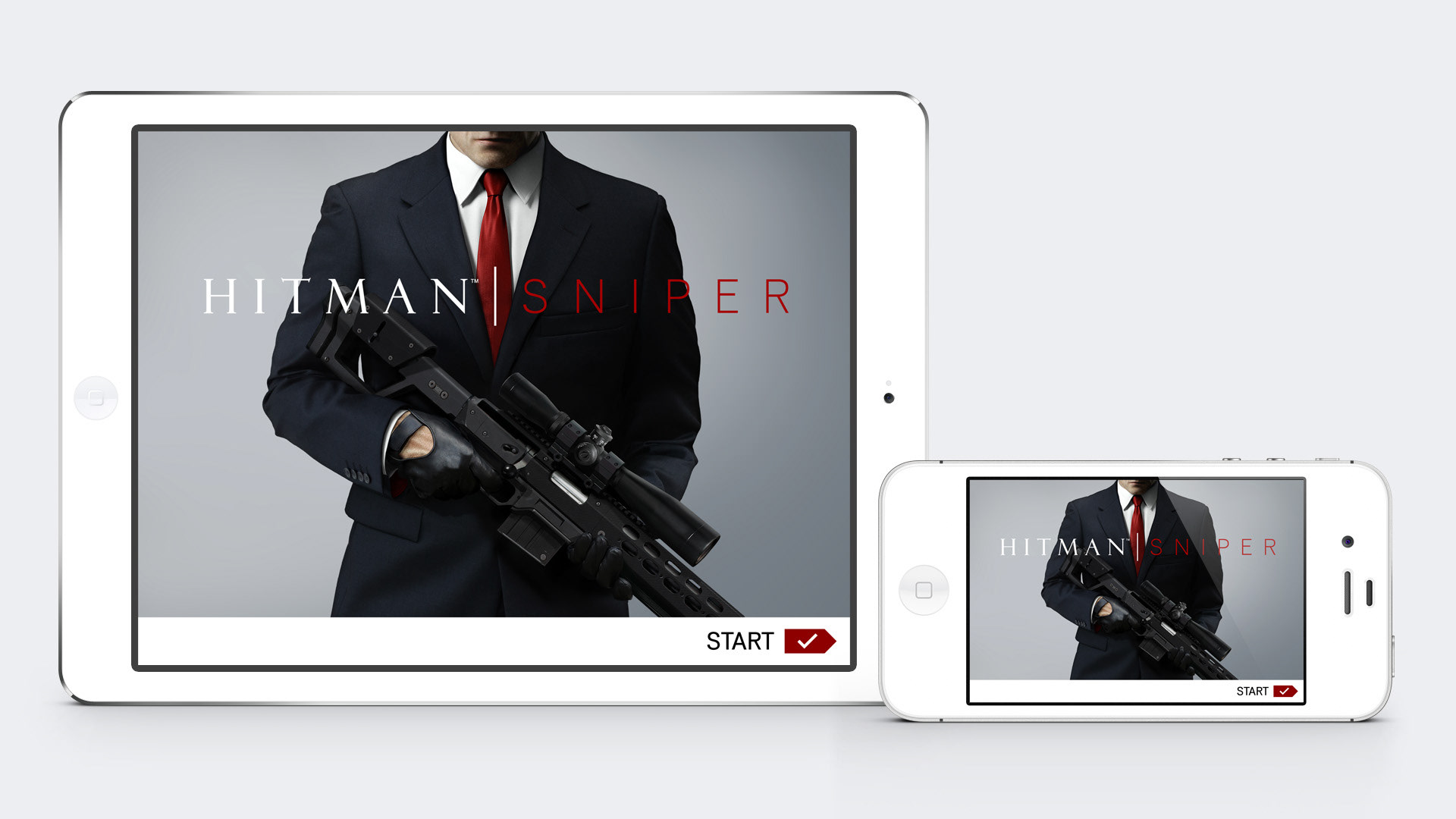
Hitman: Sniper is a high-profile award winning mobile and tablet title from Square Enix Montréal, set within the globally recognised and critically acclaimed Hitman franchise. The project’s core challenge was to translate a complex, precision-based sniping experience — traditionally designed for console and PC — into an intuitive, engaging, and accessible interaction model for touchscreen devices.
The goal was not simply to adapt an existing franchise to mobile, but to design a native mobile experience that felt authentic to the Hitman universe while being fundamentally optimized for handheld interaction. This meant simplifying complex mechanics without losing depth, ensuring the experience was easy to learn, rewarding to master, and scalable across devices and platforms.
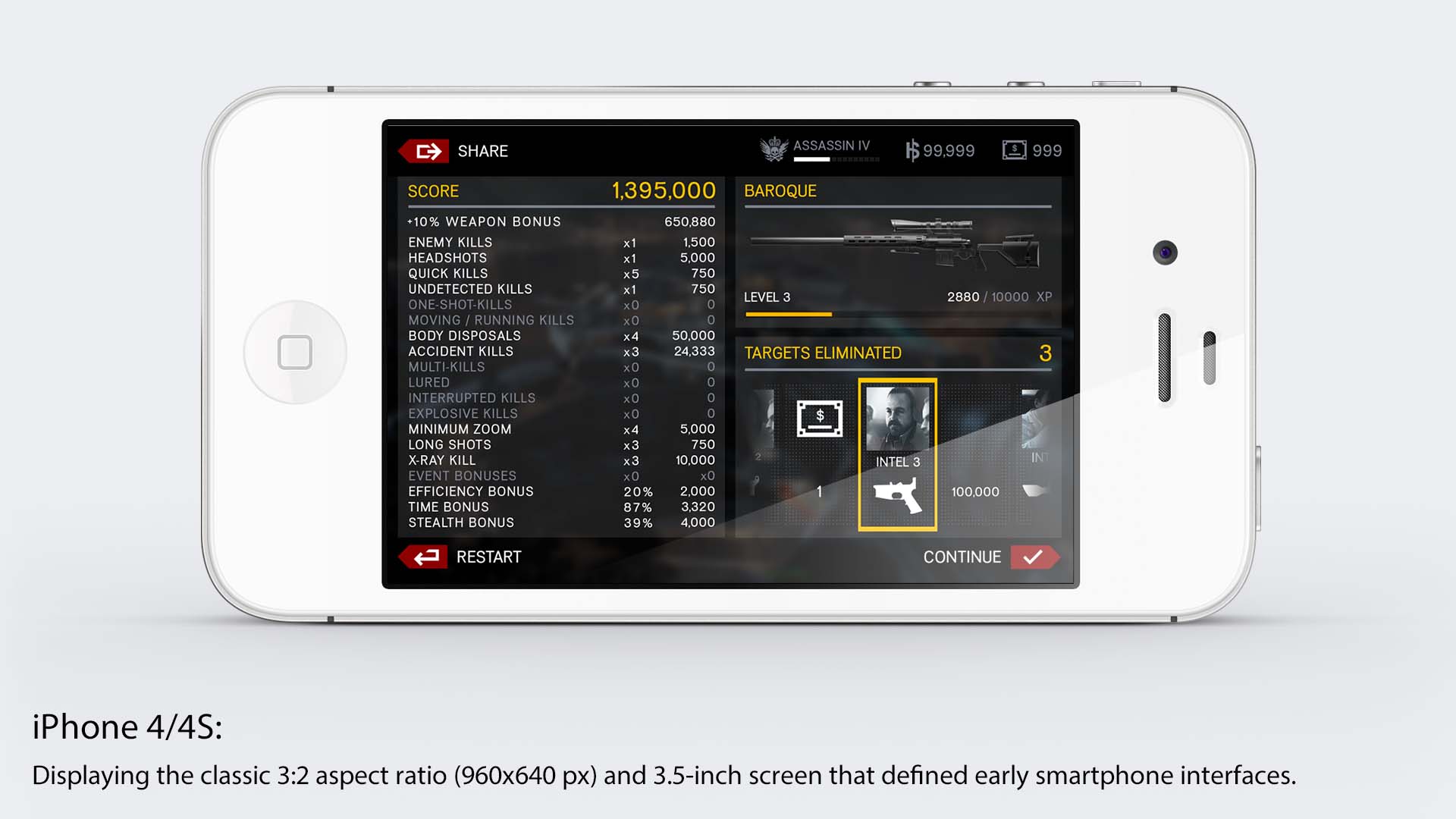
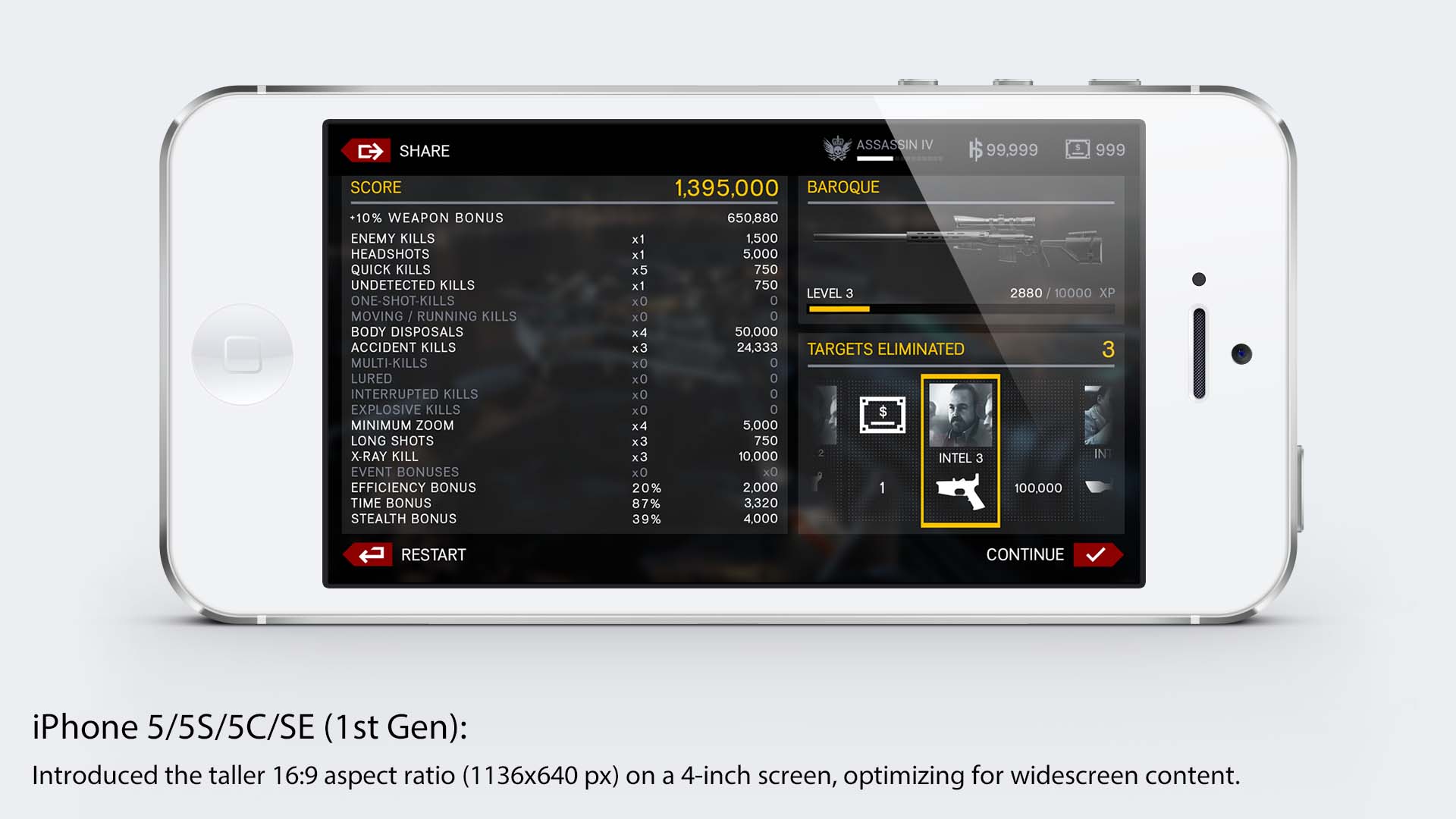
The scope evolved significantly during development. What began as an iPad-focused experience expanded to include iPhone and a wide range of Android devices, introducing substantial complexity in layout, interaction design, and technical implementation across diverse screen sizes and aspect ratios.
As the sole Senior UI/UX Designer and later UI Art Director on the project, I led the full UX and visual interface design, working closely with the Creative Director, game designers, and engineers. The focus was on building a flexible, scalable interaction system and visual language that could adapt to rapid iteration, shifting requirements, and multi-device deployment, while remaining true to the minimalist, modern aesthetic of the Hitman franchise.
10M+ players globally
Top-grossing mobile title
Canadian Video Game Award – Best Technology
High-scale consumer UX · Commercial success · Multi-platform delivery · Brand adaptation · Product-led design
My Role
As the sole Senior UI/UX Designer on Hitman: Sniper, my responsibilities spanned the entire user experience and visual interface. My primary goal was to translate intricate game features and requirements from the Creative Director and game design team into clear, effective, and visually cohesive solutions. This encompassed everything from early wireframing and user flow definitions to the creation of all final visual assets, including comprehensive UI sets, iconography, and textures. Additionally, I took on the critical role of UI Art Direction midway through the project, guiding the visual expansion while ensuring alignment with the established Hitman brand.
Challenge and Goals
This project came with a unique set of demanding challenges:
- Rapid Iteration & Evolving Scope: Game designers were constantly iterating on core gameplay and mission content, meaning the UI had to be incredibly flexible and simple to update to reflect these continuous changes.
- Adapting to Mobile First (and Second): This was my first time designing a game interface specifically for mobile, bringing a new learning curve. A significant mid-project pivot occurred when the initial plan to support only iPads shifted to include iPhones and various Android devices. This dramatically increased the complexity of adapting layouts and interactions across a wide array of screen sizes and aspect ratios.
- Technical Implementation Hurdles: The UI front-end engineers, while skilled, were new to mobile UI development. This, combined with the complexities of supporting diverse Android screen ratios, led to considerable trial and error in implementation, requiring close collaboration to achieve pixel-perfect results.
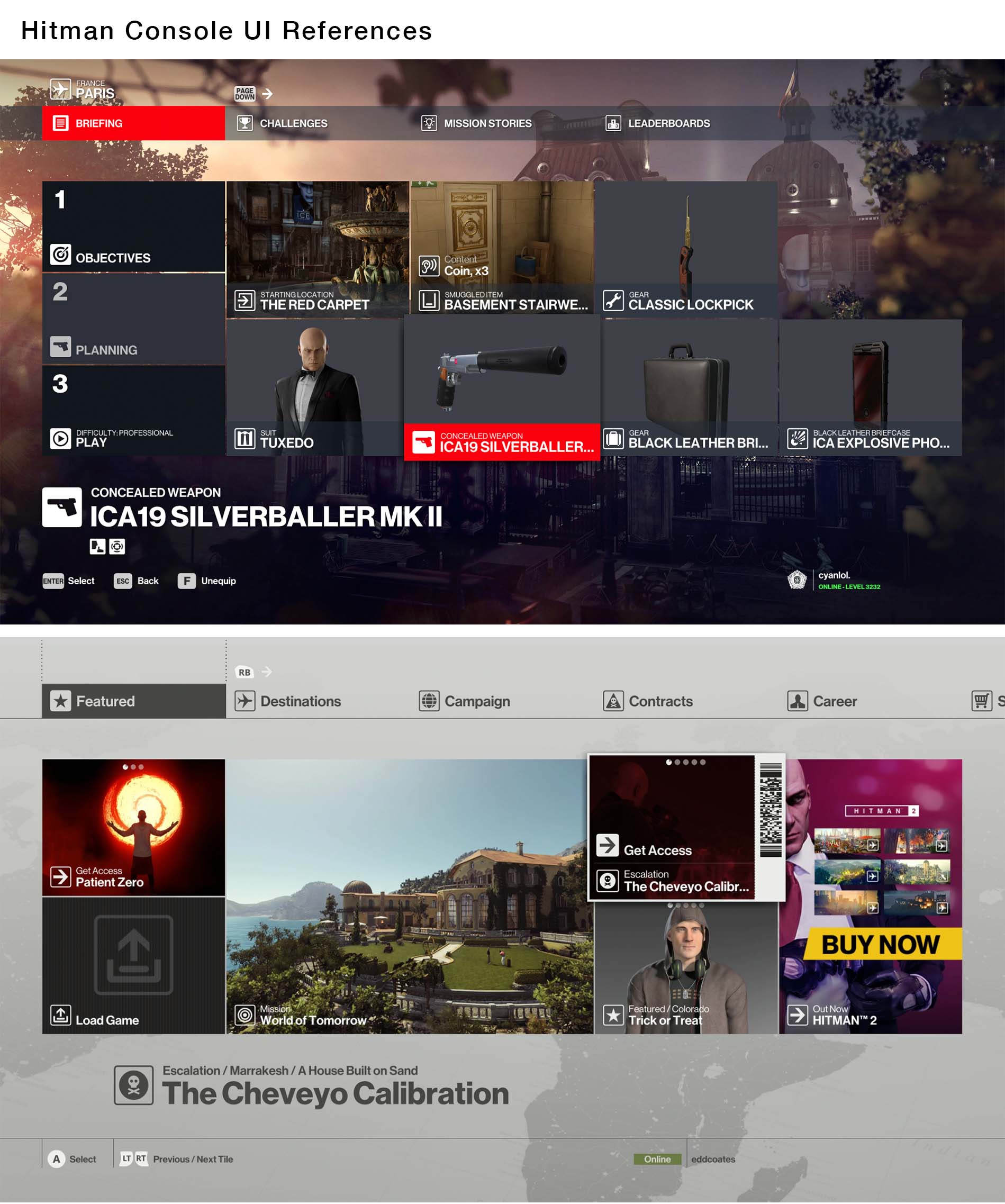
- Maintaining Brand Authenticity: While given creative freedom for visual expansion, a core goal was to remain true to the Hitman franchise's established aesthetic – often characterized by a simple, minimalistic, and modern interface.
Discovery and Research
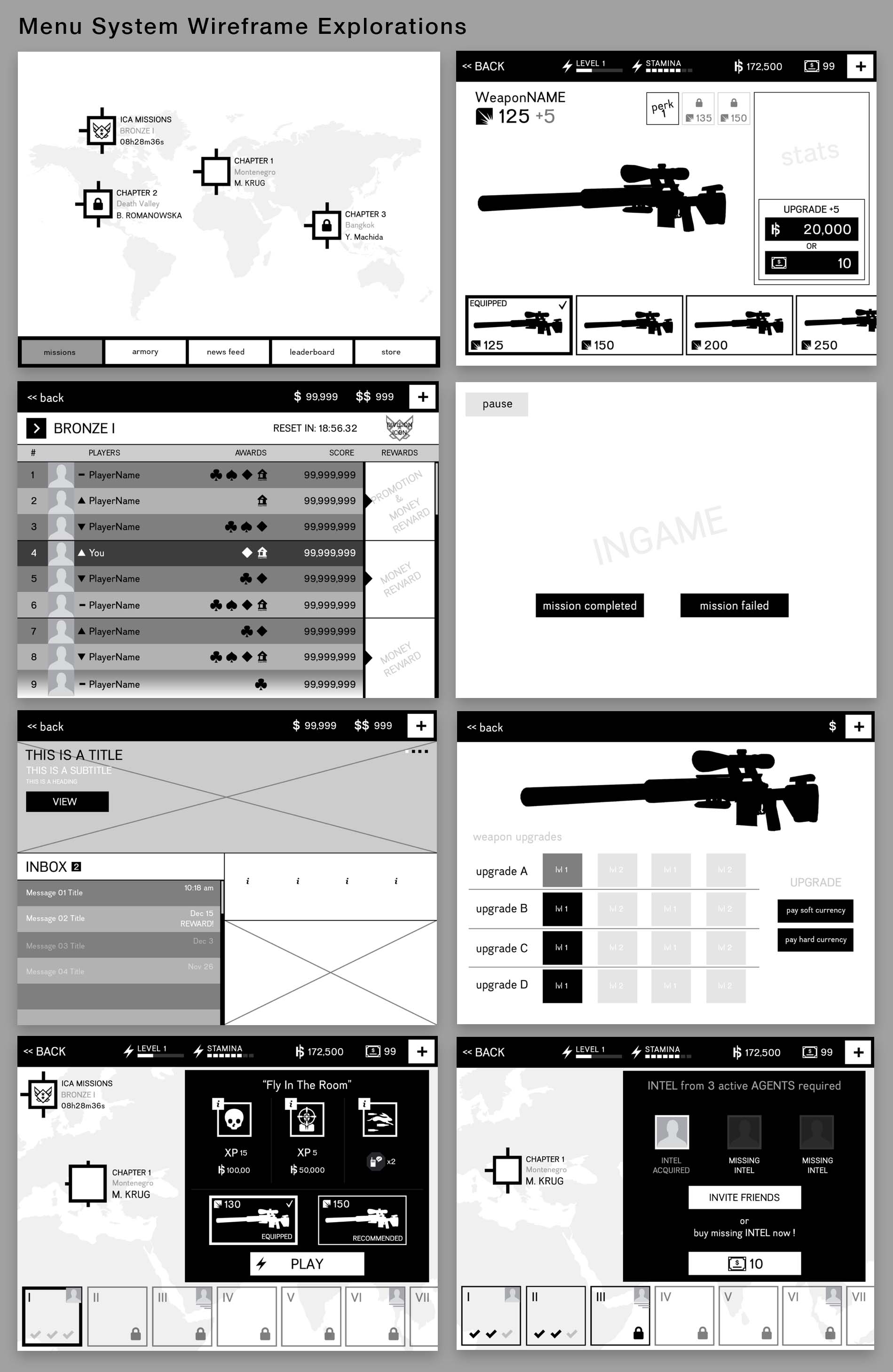
Our design process was heavily iterative, informed by continuous feedback loops. A crucial aspect of ensuring usability and clarity for players involved conducting comprehensive multiple user testing sessions via Eidos Montreal user testing lab. These sessions provided invaluable insights, allowing us to identify pain points and validate design solutions. Beyond formal testing, the ongoing collaboration with the Creative Director and game design team served as a continuous 'discovery' process, where their evolving feature requirements directly informed my UX decisions and visual interpretations.
Design Approach
My design approach for Hitman: Sniper was centered on agility, adaptability, and brand fidelity.
- Iterative & Flexible Design: Recognizing the game's dynamic development cycle, I prioritized creating a UI system that was inherently flexible and easy to iterate on and adjust. This allowed us to swiftly respond to new game features, content changes, and evolving design requirements without requiring extensive overhauls.
- Collaborative Problem-Solving: I maintained a close, continuous working relationship with both the game design and engineering teams. This tight integration was essential to support their challenges with constant iterations, ensuring that UX and visual design solutions were practical to implement and aligned with gameplay objectives.
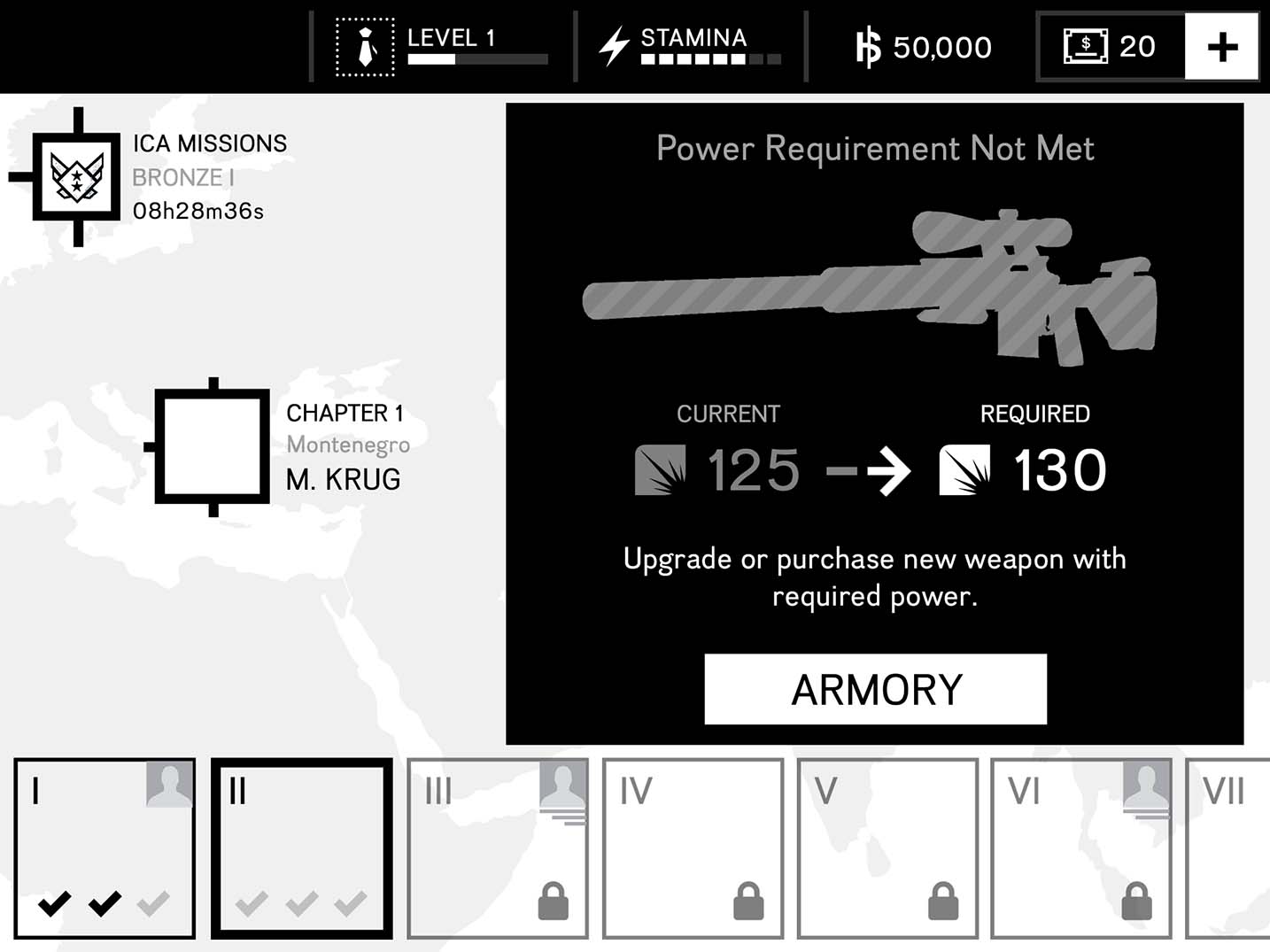
- Scalable Visuals: With the shift from iPad-only to multi-device support, my visual design approach focused on creating assets and layouts that could scale effectively across diverse screen aspect ratios, particularly for Android devices.
- Brand-Consistent Evolution: Taking on the UI Art Direction, my goal was to evolve the visual identity of the game while meticulously adhering to the Hitman franchise's signature minimalistic and modern interface principles. This involved expanding on early artistic direction while ensuring the UI felt authentic to the series.

Interaction and Visual Design
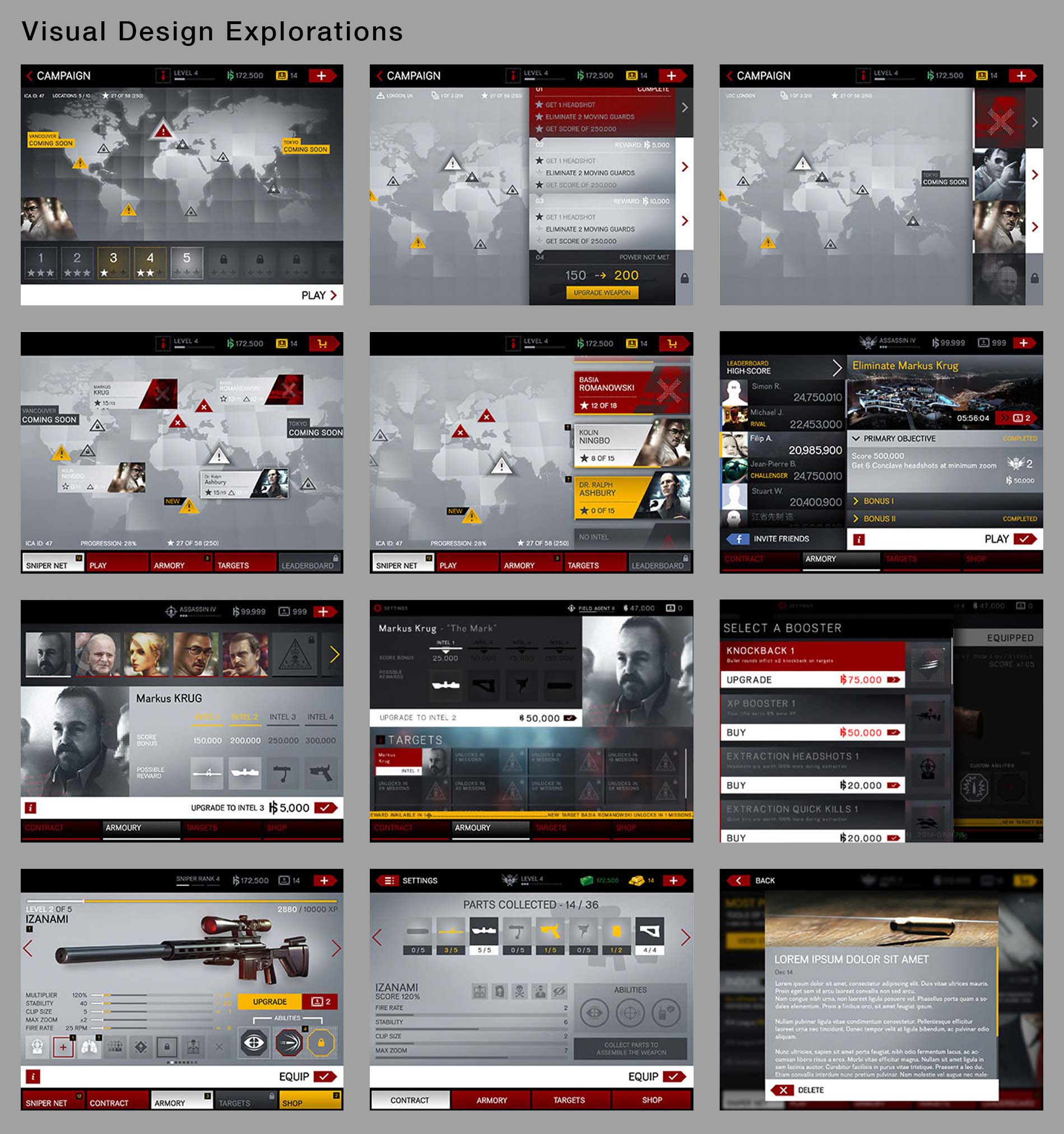
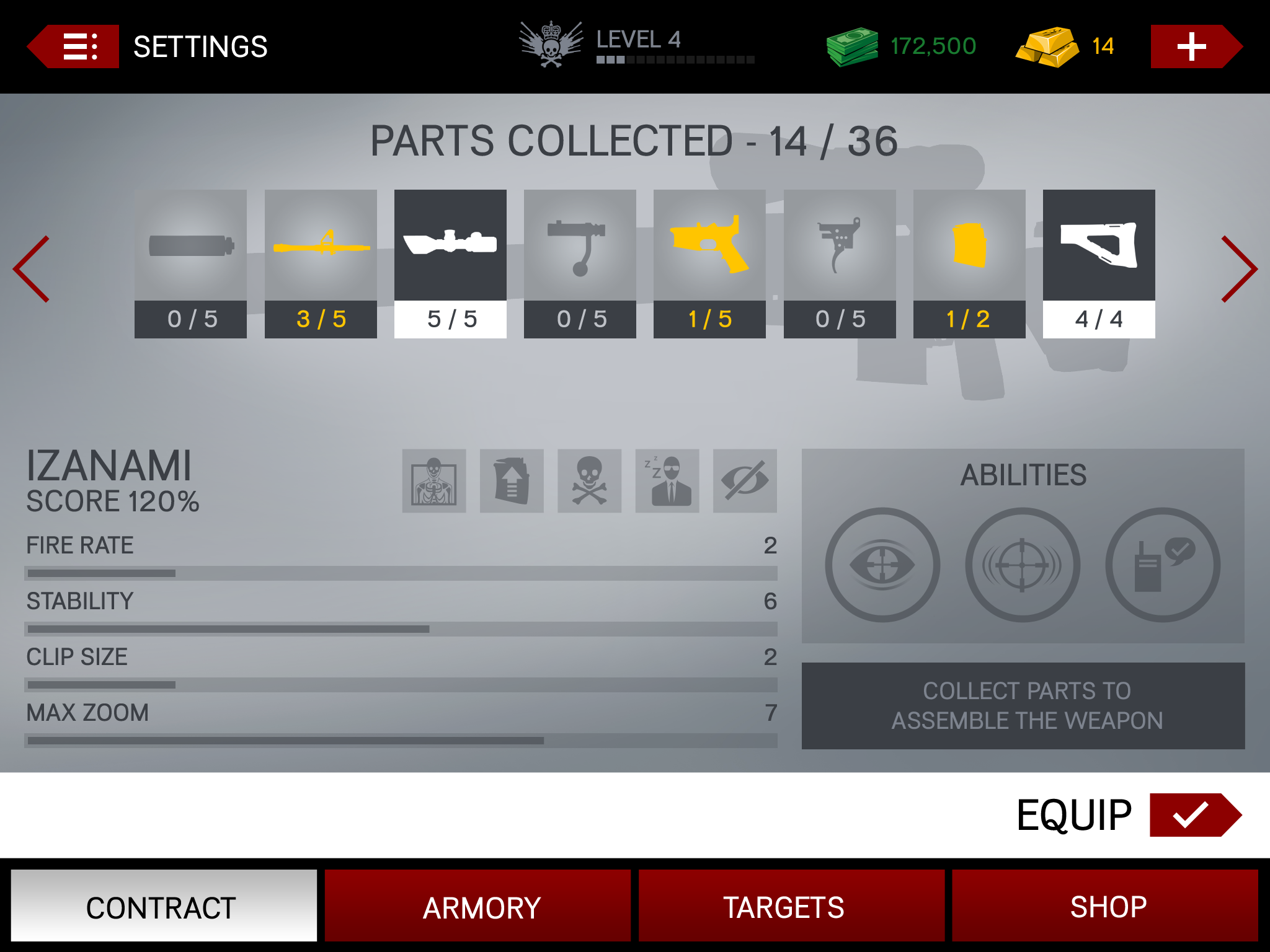
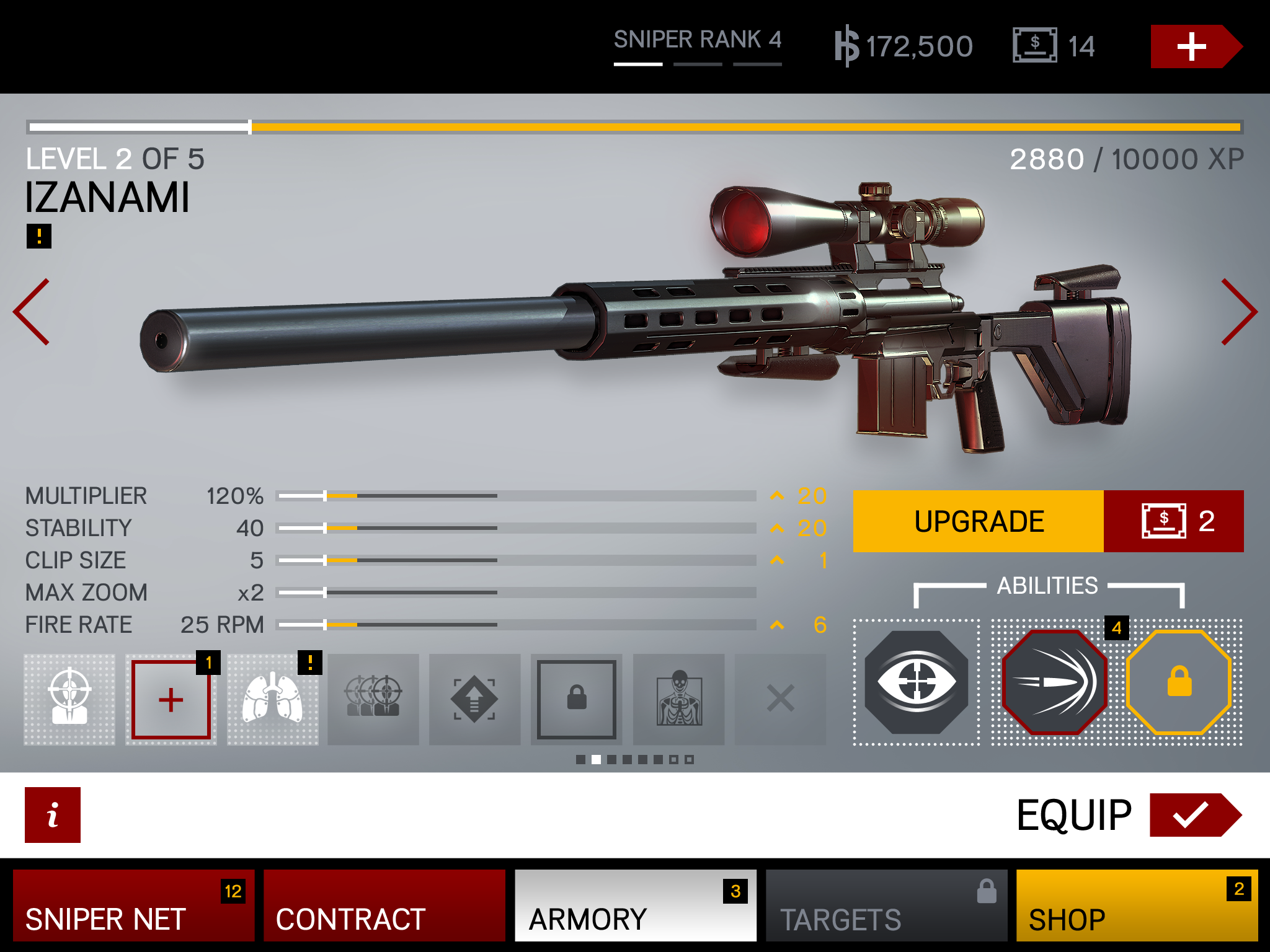
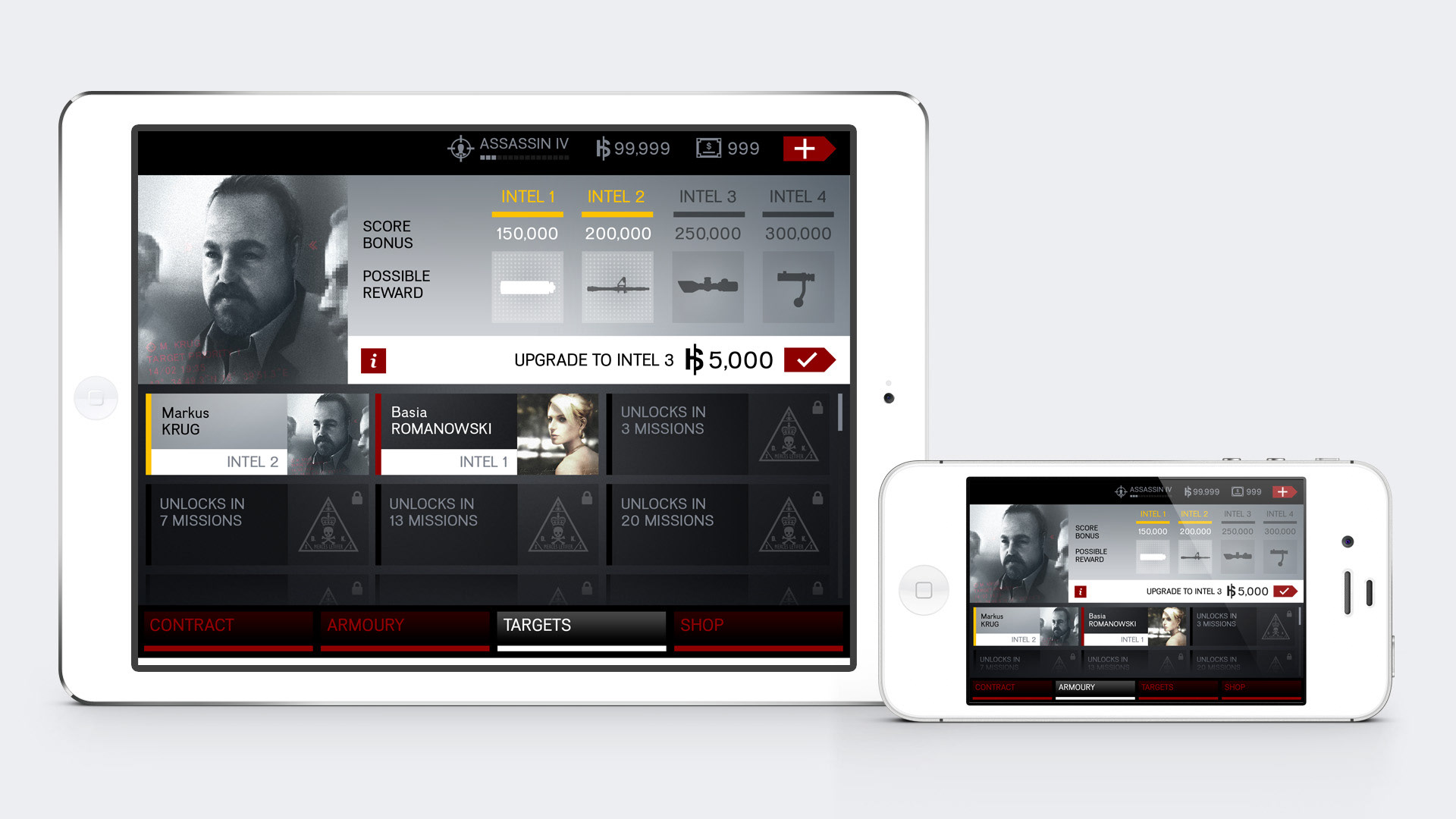
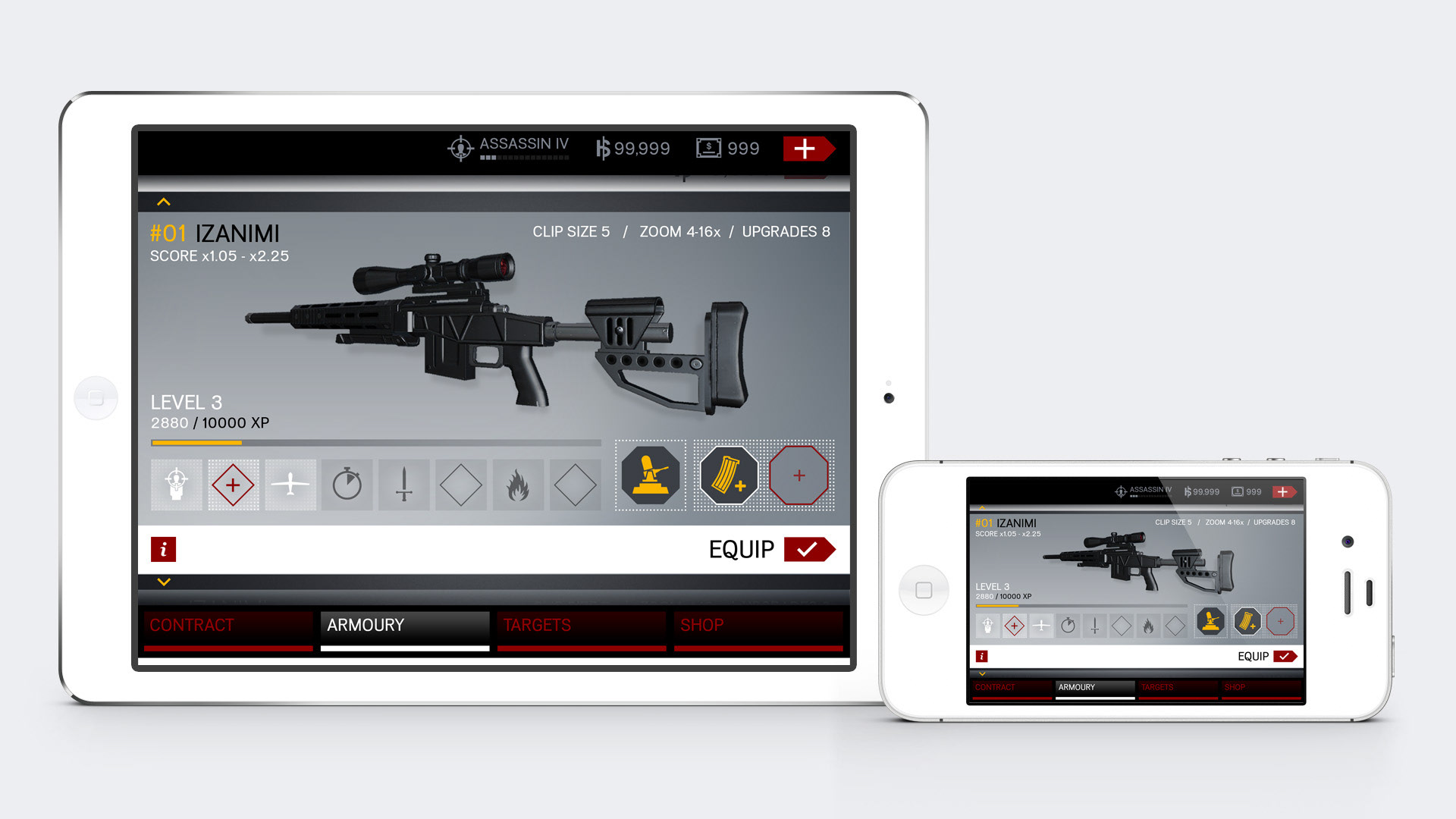
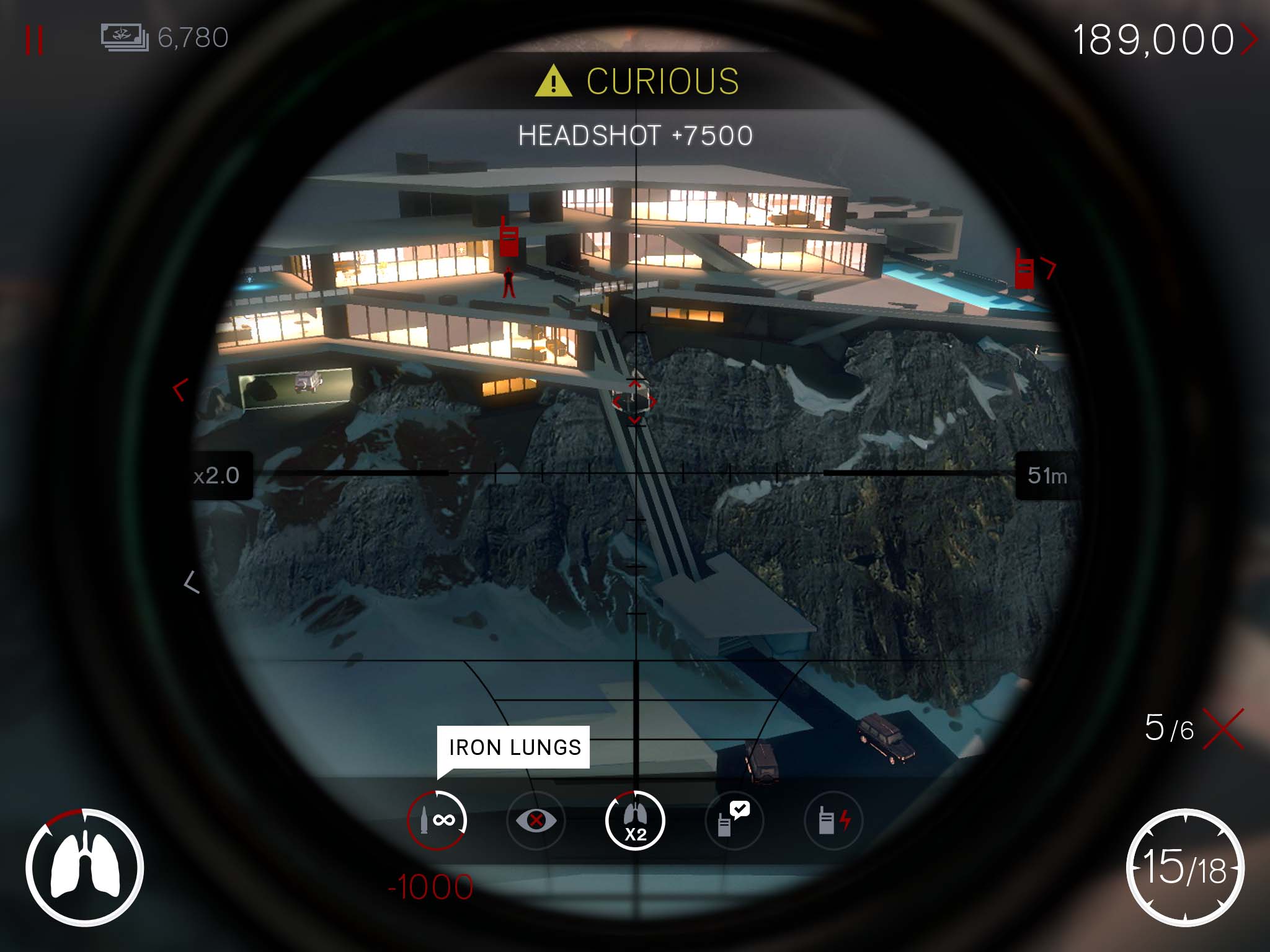
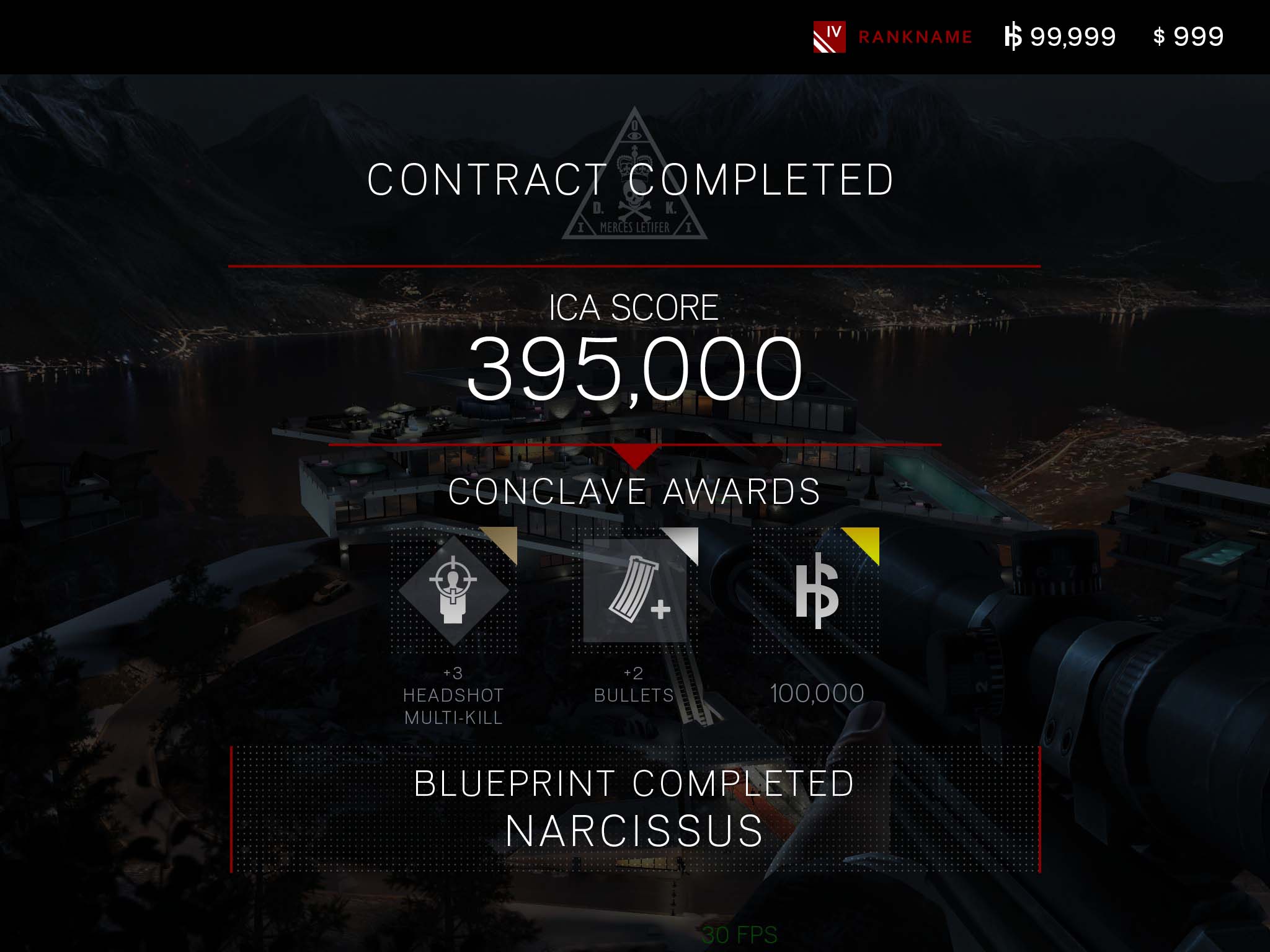
A significant portion of the project focused on the visual direction of the game's interface, aiming to create a sleek and modern aesthetic that honored the Hitman franchise's established style. This involved:
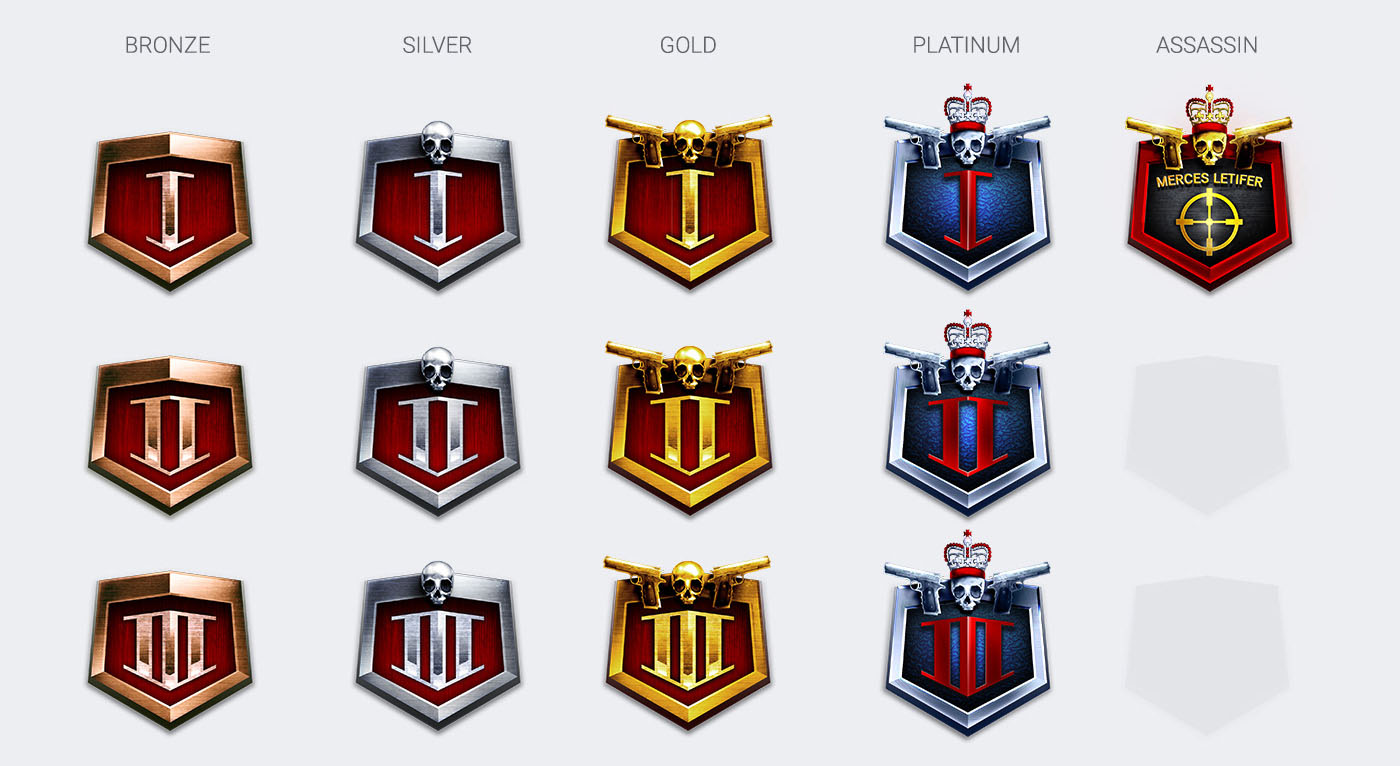
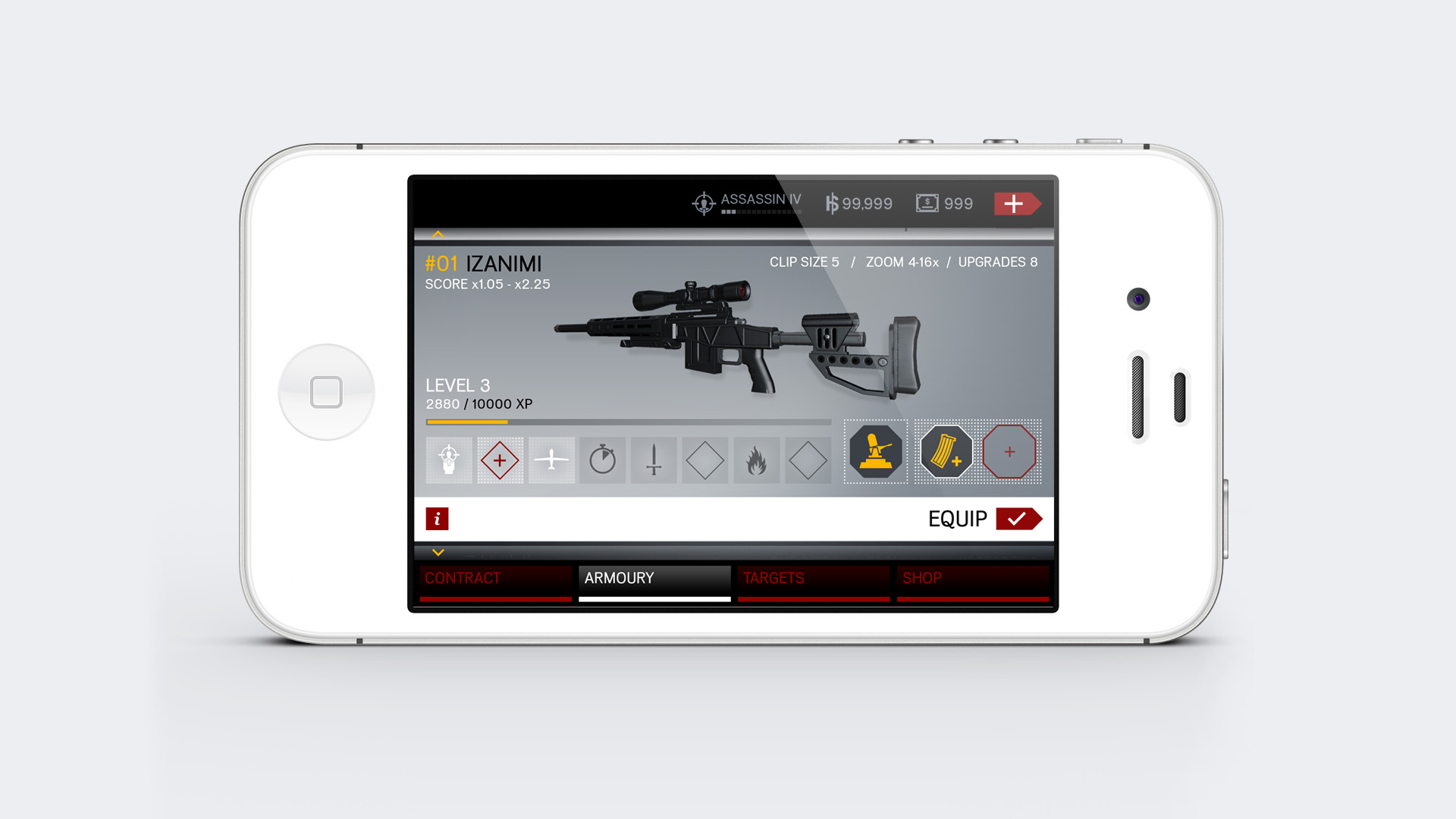
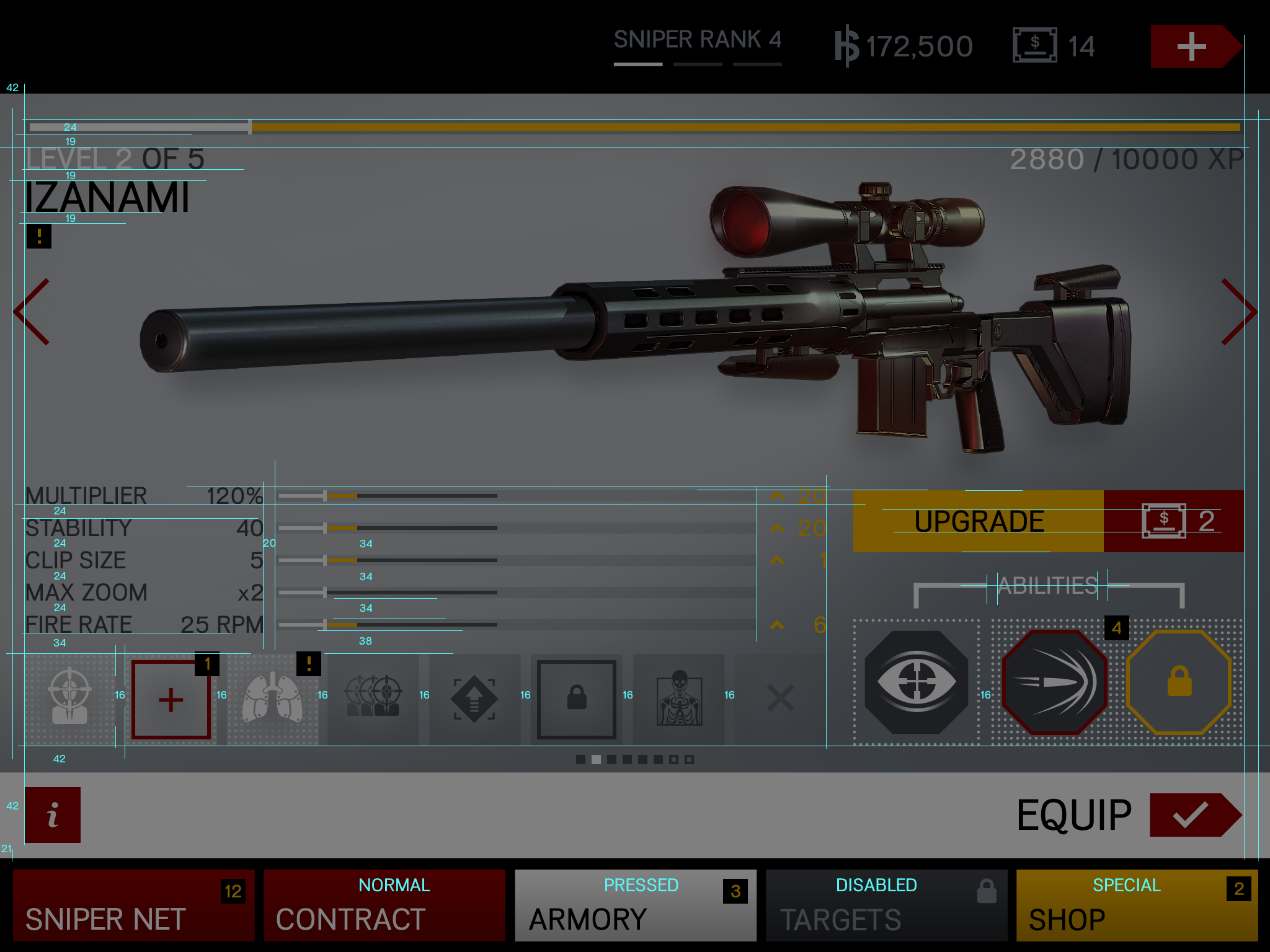
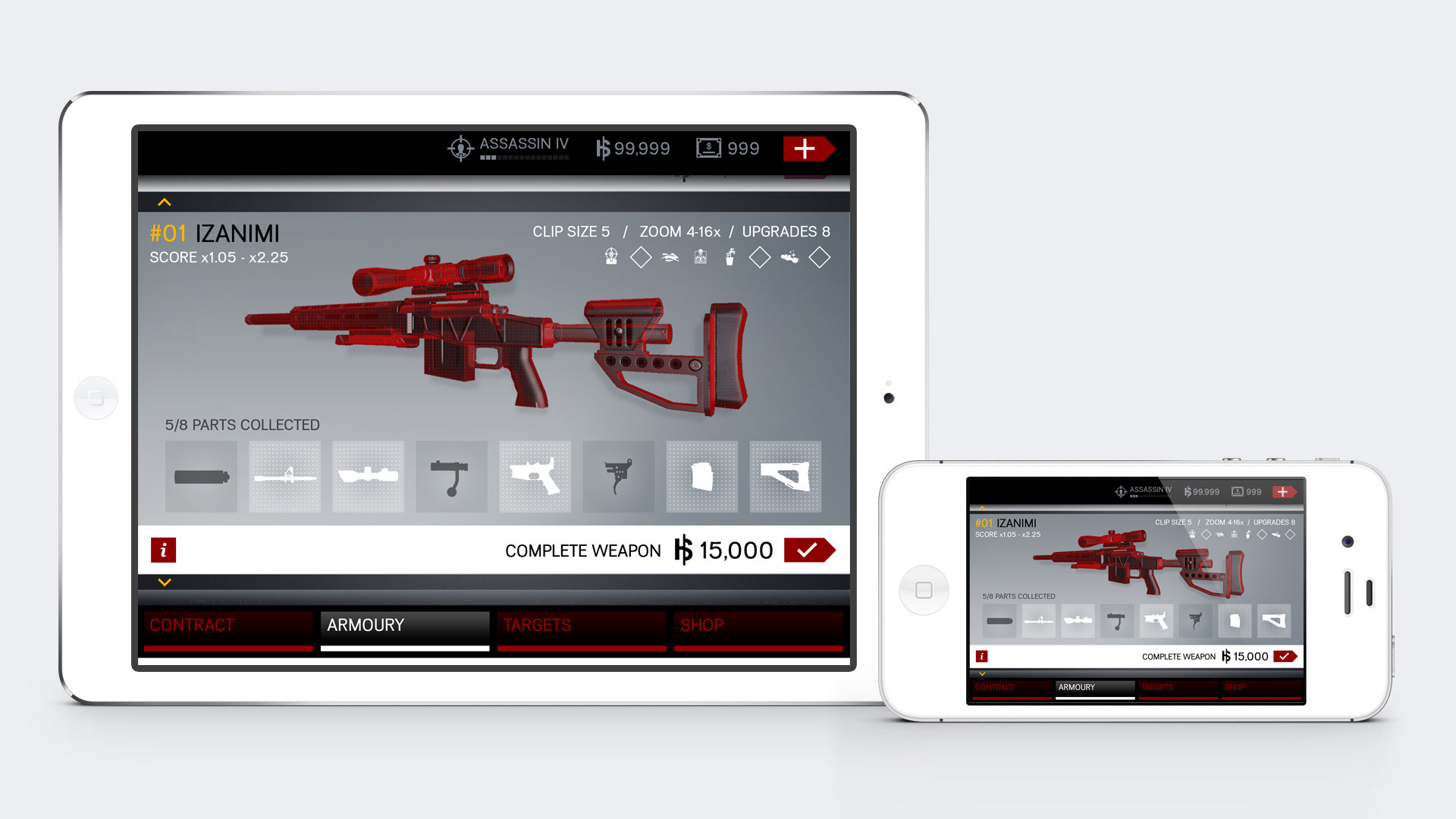
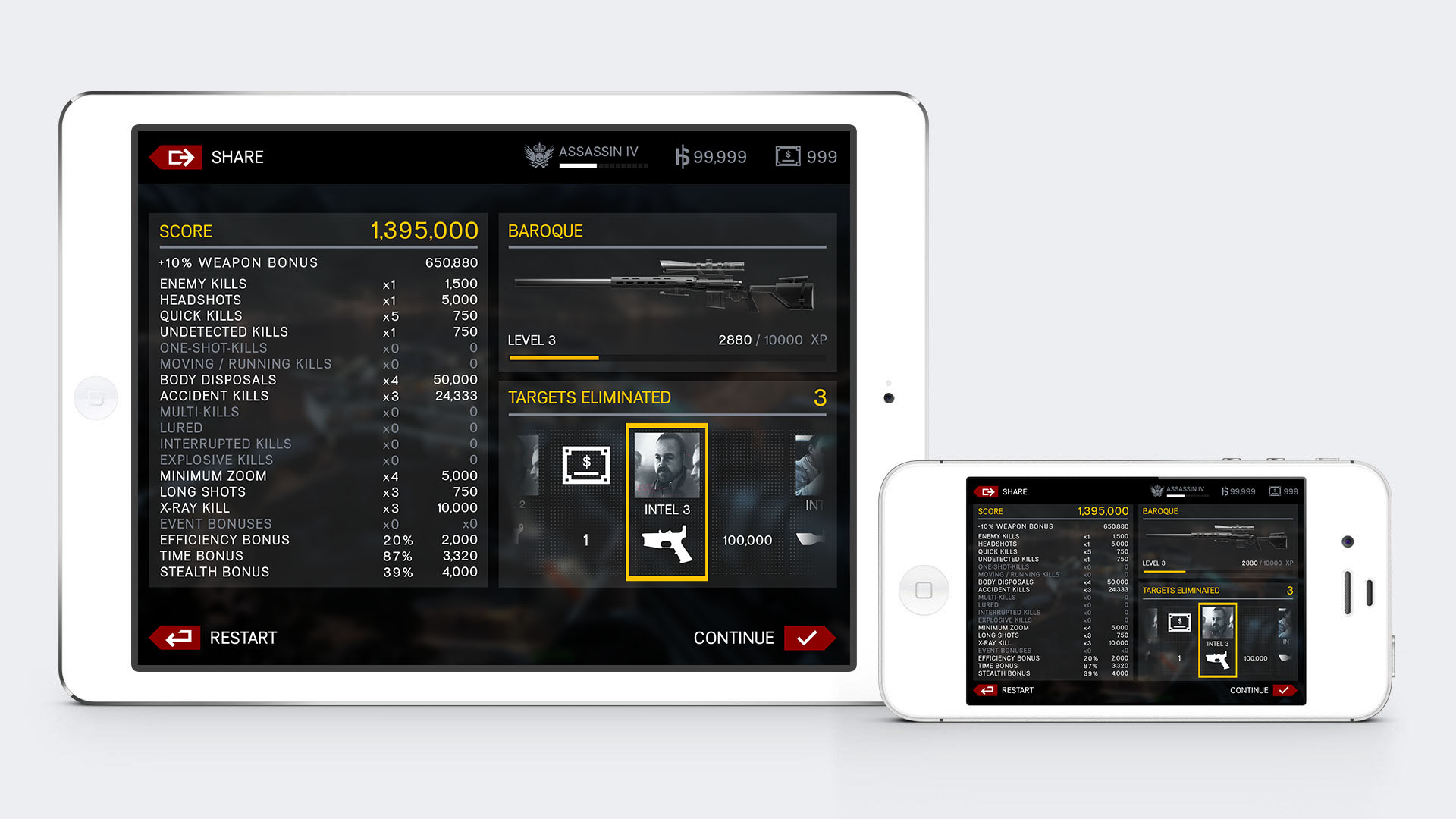
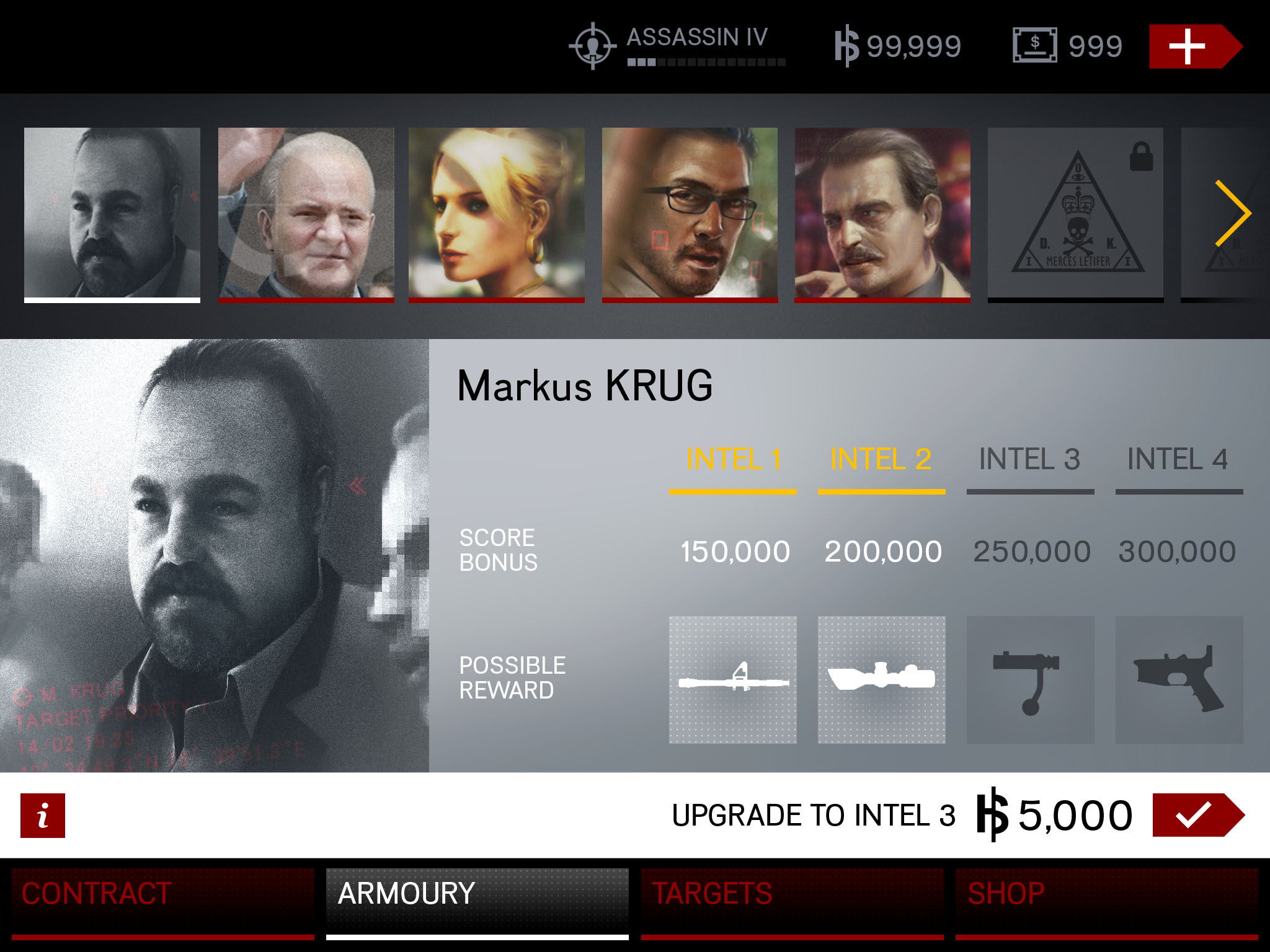
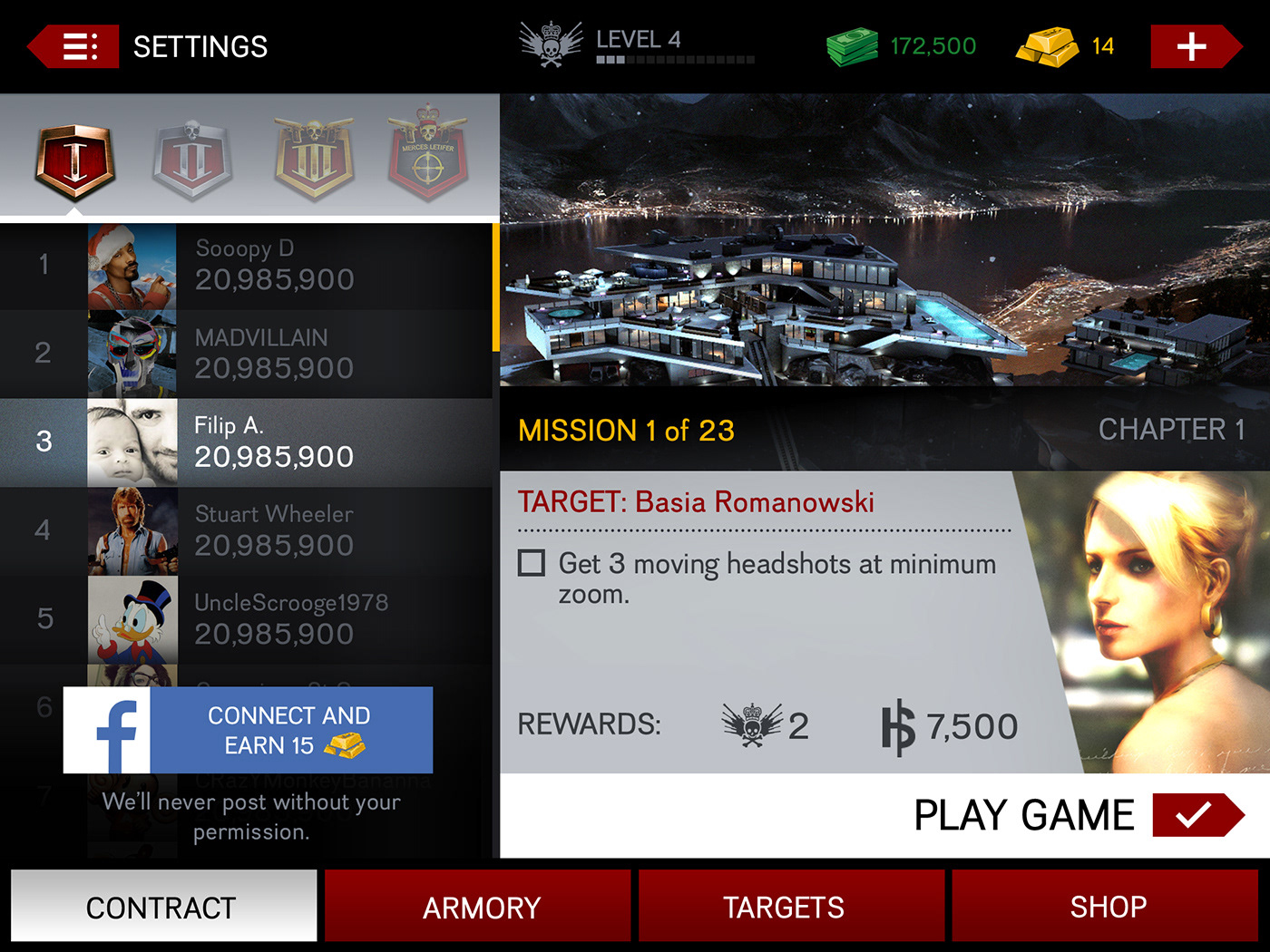
- Visual Art Direction: Expanding on initial artistic guidelines, I defined and executed the visual language, creating all final UI visual sets, custom iconography, and textures to ensure a polished and consistent look.
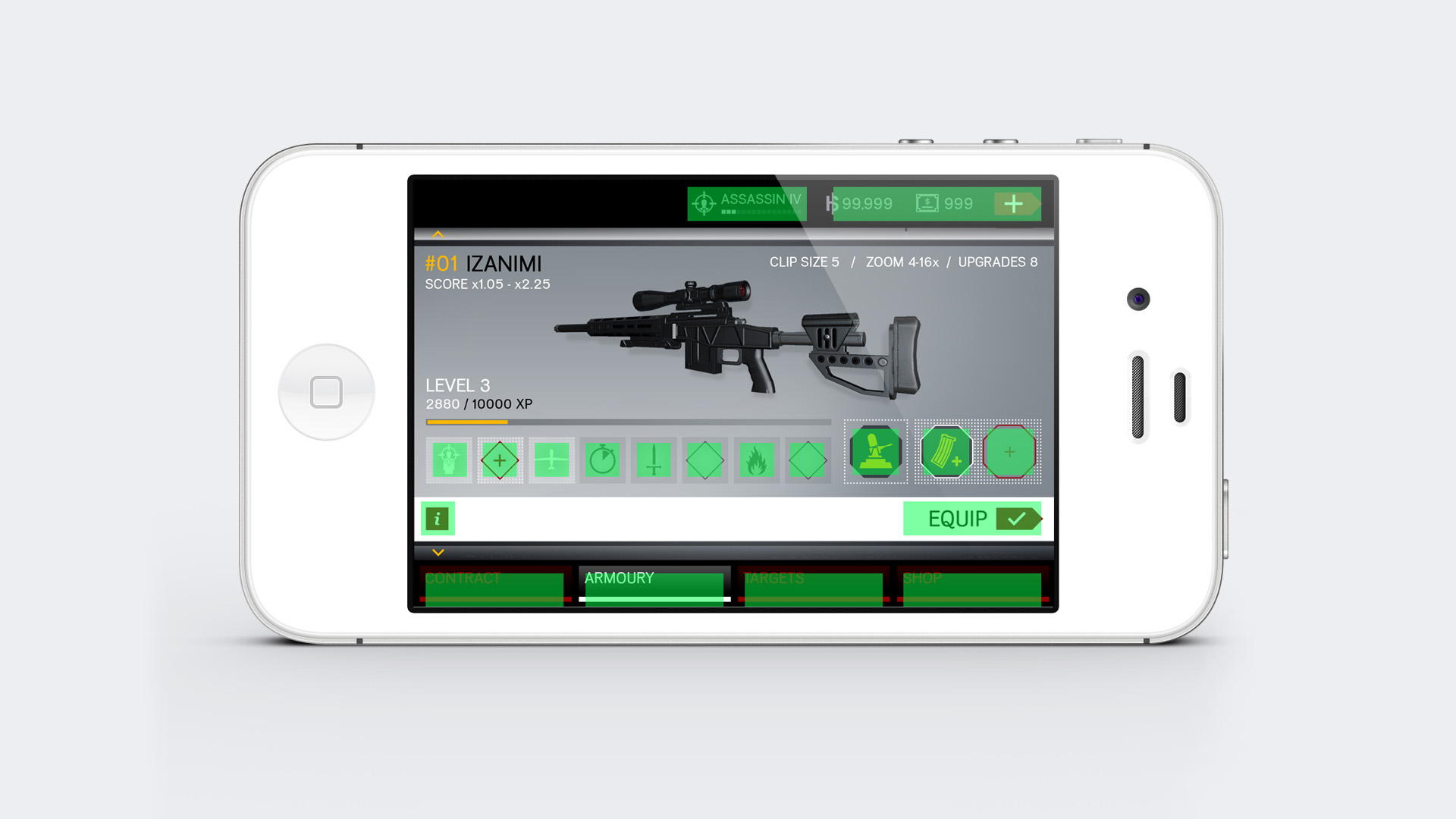
- UX Problem Solving: Simultaneously, I addressed numerous UX challenges to ensure the interface was not only beautiful but highly functional. This included optimizing user flows, touch interactions, and information hierarchy for mobile devices. Reviews often highlighted the "simple to learn shooting mechanics" and "intuitive controls" specifically designed for touchscreen devices, noting how well they translated complex sniping actions to mobile.
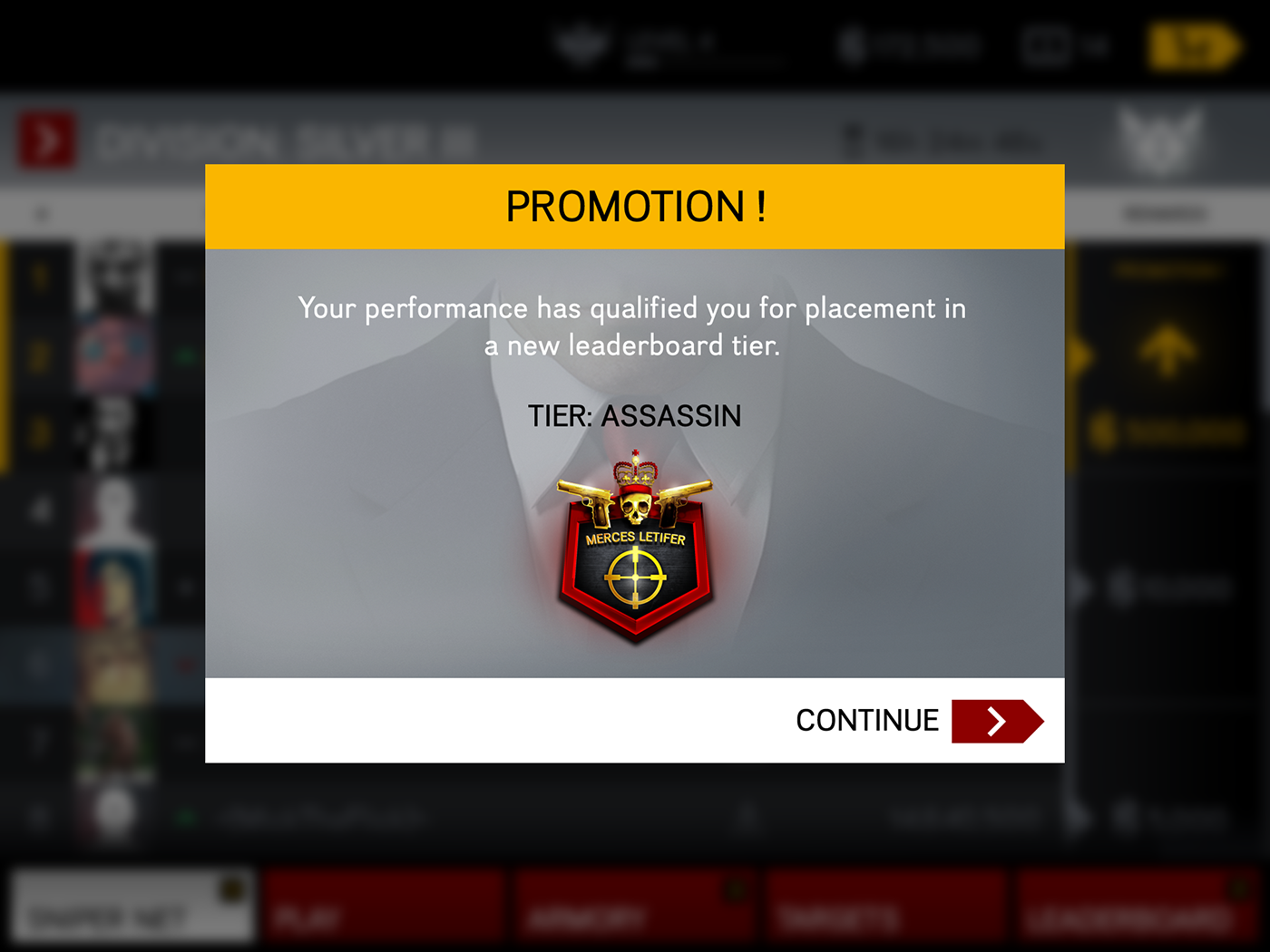
- Cross-Device Optimization: A critical aspect of interaction design involved meticulously adapting the UI for various screen aspect ratios, particularly for Android phones and tablets. This required extensive iteration and collaboration with engineers to achieve optimal layouts and responsive elements that maintained usability and visual integrity across all supported devices. The game was praised for its "fluid sniping controls" and how it "runs well all the time," even on smaller screens, showcasing the success of these adaptation efforts.
Special Focus
Navigating Dynamic Scope and Technical Constraints on a Solo Mission
This project uniquely underscored the importance of agile design in a rapidly evolving game development environment. As the sole Sr. UI/UX Designer, I was responsible for not only delivering all design assets but also for anticipating and accommodating the continuous iterations from the game design team. The sudden shift from iPad-only to comprehensive mobile support, including the fragmented Android ecosystem, presented a significant technical and design challenge. This required constant communication with the engineering team, leading to a trial-and-error approach to ensure the UI performed optimally across every screen size. This experience honed my ability to create highly adaptable design systems and to proactively solve complex scaling issues under tight deadlines.
Outcome and Impact
Despite the ambitious scope changes and inherent complexities of game development, the final interface for Hitman: Sniper was met with high satisfaction. I was personally very pleased with the outcome, and this sentiment was shared by the entire development team.
The game achieved significant commercial and critical success. It received 'generally favorable' reviews from critics, with a Metacritic score of 76/100 for iOS, and was praised for its clever puzzle design and minimalist approach. Notably, in March 2018, Hitman: Sniper surpassed 10 million players globally, establishing itself as one of Square Enix Montréal's key and most lucrative mobile titles. Its strong performance even helped to fund the development of the studio's critically acclaimed 'GO' series of puzzle games. Reviewers frequently highlighted the game's "polished" feel, "detailed visuals," and the "well-designed" gameplay and controls for touchscreen devices, affirming the success of the UI/UX efforts in delivering a premium mobile experience.
Hitman: Sniper won 2015 Canadian Video Game Award for Best Techology and was also nominated for Best iOS Game and Best Canadian-Made Game
"The overall experience of Hitman: Sniper is a masterclass in elegant design, with every element feeling thoughtfully placed to guide the player without being intrusive. The game's flow and feedback systems create a seamless and highly satisfying user journey."
Gamezebo.com
Key Learnings
This project was a rich learning experience, particularly in:
- Designing for Extreme Adaptability: I learned to create UI systems that are inherently flexible and easy to iterate, essential for projects with frequent design changes and evolving scope.
- Mastering Mobile UX Challenges: This was my intensive introduction to designing for diverse mobile form factors, specifically tackling the complexities of supporting multiple Android screen aspect ratios through extensive prototyping and testing.
- The Power of Close Collaboration: The continuous, tight-knit collaboration with game designers and engineers proved vital for translating vision into reality, overcoming technical hurdles, and ensuring timely adjustments.
- Evolving Brand Visuals: Taking on UI Art Direction mid-project taught me how to responsibly expand a brand's visual identity while staying true to its core tenets.


